

Biohacking, Women’s Health, and the Future of Aging Well


Scott and I recently went to Dave Asprey’s BEYOND Biohacking Conference in Austin, Texas, and I came home feeling like I have a lot of research to do. I felt a little overwhelmed, but also excited and empowered by what may be possible.
The conference was filled with main stage speakers, breakout sessions, over 100 experts, and a huge floor of booths featuring testing, technology, supplements, gadgets, wellness products, and health tools I had never even heard of before.
Biohacking and personalized health are still newer worlds for me, so some of it felt futuristic. Some of it felt overwhelming. Some of it made me think, “Wait, do we really need all of this?” And yes, some of it felt a little snake oil-ish.
But a lot of it felt hopeful.
What stayed with me most was the idea that biohacking, women's health, and aging well are all pointing toward the same thing: a more personalized, proactive approach to how we live. Not just living longer, but living healthier longer.
That is the difference between lifespan and healthspan. Lifespan is how long we live. Healthspan is how well we live during those years. And that concept really speaks to me.
For Scott and me, one of the most powerful parts of the conference was hearing more about early detection. Scott has a family history of pancreatic cancer, and pancreatic cancer is one of those cancers that is especially scary because it is so often found too late.

One of the speakers we heard from was Naveen Jain, the founder of Viome. Viome is doing fascinating work around using data from the body, including things like blood, stool, saliva, and other biomarkers, to better understand what is happening inside of us. He spoke about the possibility of earlier detection of cancers like pancreatic and colon cancer, and that really got my attention.
Of course, this is still an evolving area. I am not saying this is fully developed tomorrow, and I am definitely not saying any test replaces your doctor. But hearing people talk about finding serious disease earlier, when there may be more options, felt incredibly promising. That may have been one of my biggest takeaways from the conference.
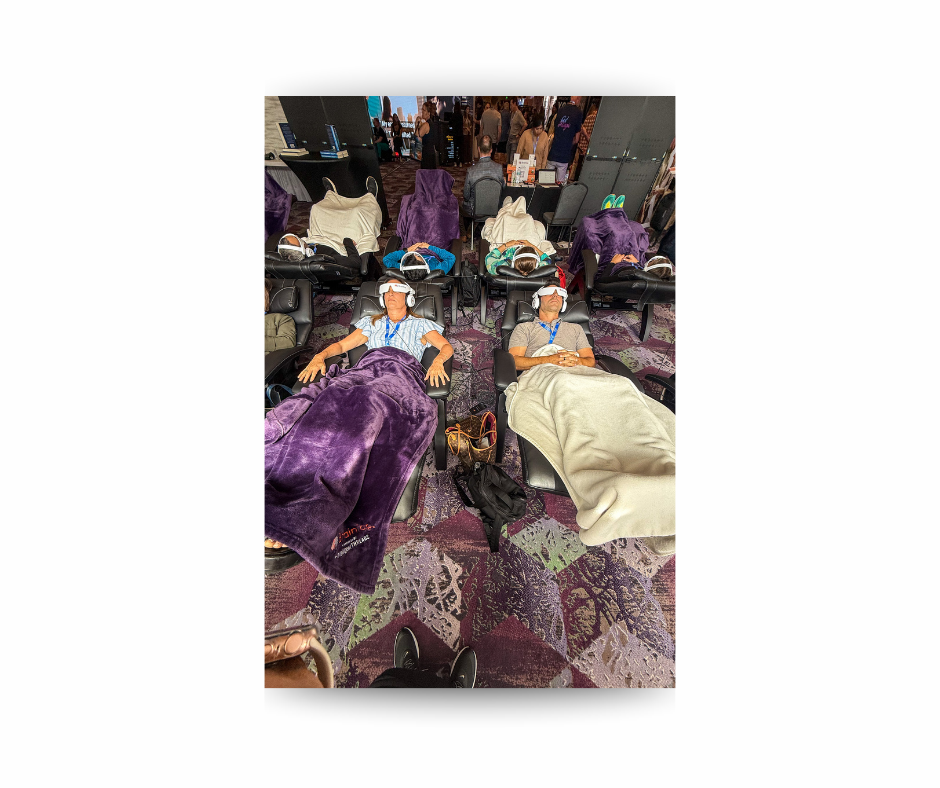
The future of aging well is not just about looking younger or having more energy, although I am not against either of those things. It is about being more informed. It is about doing your own research. It is about understanding what data, testing, symptoms, and patterns may help us make better decisions before we are in crisis.
Another highlight for me was the women’s health conversation. I went to a breakout panel focused on women’s health, fertility, hormones, menopause, and the vaginal microbiome. This really got me excited. For so long, women have been dismissed, under-researched, misdiagnosed, or told that what we are feeling is just “normal.” Normal itching. Normal discomfort. Normal dryness. Normal hormone changes. Normal mood shifts. Normal struggling. I do not believe that just because something is common, it means we are supposed to suffer through it.
One of the companies I learned more about was Evvy, which is focused on the vaginal microbiome. The idea is that instead of guessing what is going on, women can test and get more personalized information about what their body may need. That could mean different support depending on what is actually showing up in the body. Maybe it is bacterial. Maybe it is hormonal. Maybe it is related to menopause, fertility, recurring infections, or something else entirely. To me, that represents a big shift in women’s health; Less guessing, more information, and More personalization.

I also got to meet Dr. Anna Cabeca, the doctor behind Julva, which I have shared before. Julva has personally been very helpful for me with certain symptoms like itching and discomfort, and I love that she is talking openly about things so many women are embarrassed to bring up.
Her work is very much aligned with something I believe deeply. We should be able to talk about our bodies without shame. We should be able to ask questions, look for solutions. And we should not have to just live with something because we were told, “That’s just what happens” when you hit a certain age or stage of life.
There was also a lot of talk at the conference about peptides, exosomes, stem cells, nervous system regulation, mindset, longevity, brain health, hormone health, and personalized medicine. Some of it I am still learning about. Some of it I want to research more before I would ever personally try it or recommend it. And some of it simply reminded me how much there is still to learn.
But overall, I left Austin feeling inspired.
Aging well, to me, is not about chasing every trend. It is about staying curious. It is about learning what is possible. It is about being willing to question the old idea that we have to accept feeling tired, inflamed, itchy, uncomfortable, foggy, or disconnected from our bodies.
It is about combining modern science, common sense, and self-awareness. And maybe most of all, it is about giving ourselves permission to want better answers for our health. To keep asking questions, keep paying attention to our bodies, and keep looking for options that help us feel better as we age.
I have a feeling this conference is going to influence a lot of what I read, research, and share over the next year.
And yes, I already hope to go back next year.


Comments